Clean, reliable water is crucial for quality, compliance, and efficiency in many applications, from food and beverage production to industrial manufacturing and healthcare. However, water quality challenges vary across sectors, and there’s no one-size-fits-all solution. At Fileder, we are UK and European-based experts in filtration and water treatment, and in this blog, we will discuss the top water treatment solutions, what they’re used for, and why they’re important.
Sediment Filtration
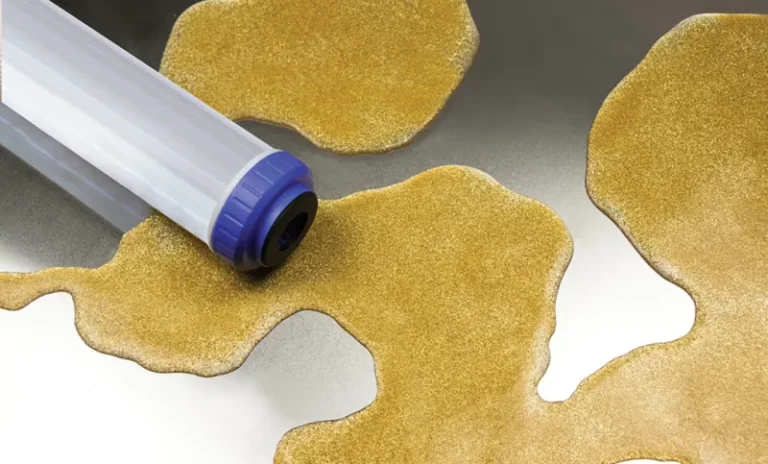
Sediment filtration systems remove visible particles like sand, rust, salt, and other forms of debris from water. ‘Sediment’ is a general term for any particulate matter in your water that is not liquid. For example, pleated cartridge filters (PPP, PPPES) are used in food production, manufacturing, and private water supplies to protect downstream equipment from large particles, improve water clarity for taste and odour, and ensure consistent product quality.
These filters are the first line of defence against any dirt and debris, and stop the solid particulate from entering the water supply and hindering the performance of the water filtration systems. Surface filters use a large surface area to catch large amounts of debris, whereas depth filters use a depth gradient to filter out suspended particles.
Types of Sediment Filters
Pleated Filters
Pleated filters are made of pleated sheets of thin filter media such as polyester or polypropylene – these are generally referred to as surface filters. The pleats stop sediment from passing through and form a layer of dirt on top of the filter media.
Spun Filters
Spun filters use depth gradients to remove sediment from the water. This filter can trap finer particles due to the graded density, which can filter down to 10 microns. They’re ideal for a range of particle sizes.
Bag Filters
Bag filters trap sediment by processing water through small permeable pores, which can range in micron size from 1 to 200. The bags are made of polyester, polypropylene felt, or nylon and come in a range of sizes depending on the application.
There are many applications and sectors where sediment filtration is used, for example:
- Restaurants and coffee shops need to ensure the quality of their food and drinks.
- Homes to remove particulates from entering sinks, showers, and appliances.
- Aquatics to block dirt and clay from entering swimming pools, for example.
Activated Carbon Filtration
Activated carbon water filters use processed carbon to remove contaminants in water, such as chlorine, VOCs, PFAS, pesticides, and chloramines. This filtration method is a simple, low-energy process that enhances quality and ensures sustainability. The carbon is activated through a high-temperature process that creates millions of tiny pores across its surface. Contaminants naturally stick to the surface of the carbon, creating a highly effective process.
Carbon filters are generally used as point-of-entry (POE) systems to filter commercial properties or point-of-use (POU) filters to clean the water before it is used in industrial or commercial settings. This treatment removes unpleasant tastes and odours in water, making it perfect for beverage production and food processing, as well as for chemical and applications and processes that require an aesthetic final product. For example, CTO Carbon Block Cartridges or GAC filters are generally recommended for chemical and aesthetic improvement.
Types of Activated Carbon Filters
Granular Activated Carbon (GAC) Cartridges
Great for general taste and odour removal, especially when sediment isn’t a big issue. GAC cartridges have a high contact area with loose carbon granules, which is effective for reducing chlorine. GAC offers high flow rates and good capacity.
Carbon Block
Carbon block filters are made by compressing very fine activated carbon powder into a dense, solid block that creates a tight, uniform pore structure. This forces water to travel through a maze of carbon, ensuring a greater absorption efficiency as the water spends more time in contact with the carbon. This type of activated carbon filtration is great for point-of-use applications or where specific chemical removal is needed.
Carbon Fibre
As a more advanced carbon technology, carbon fibre uses powdered activated carbon in a synthetic fibre matrix to combine absorption with depth filtration. This reduces pressure drop and allows one-stage removal for both sediment and chlorine.
Reverse Osmosis (RO)
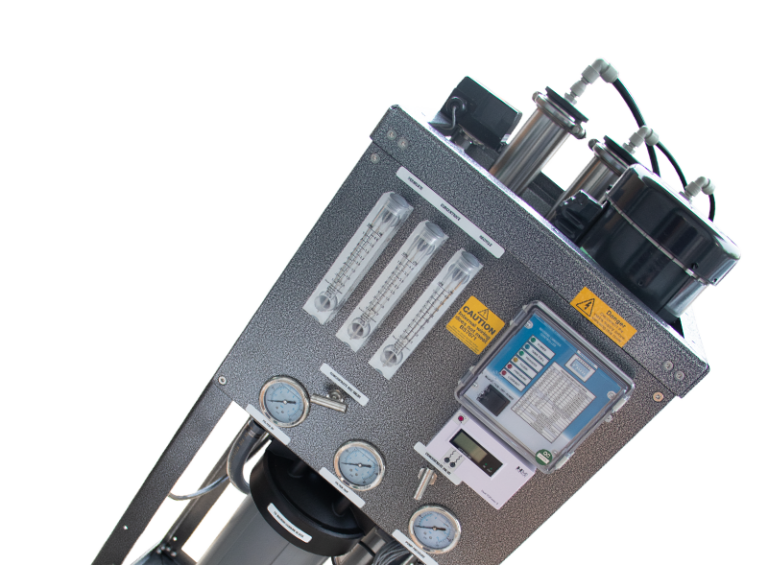
Reverse osmosis forces water through a semipermeable membrane to remove dissolved salts, heavy metals, and dissolved contaminants from water in a range of applications. Sometimes, a combination of systems is used, depending on the quality of the water you have. But generally, reverse osmosis delivers extremely pure water that is suitable for laboratories, healthcare, and precision manufacturing. For example, our compact and modular RO systems, ideal for industrial and scientific applications
Unlike other filtration systems that operate on a low-pressure water system, RO requires a higher-pressure pump to drive the water through the membranes, for the end result of pure water with typically 99% of dissolved impurities removed.
Types of Reverse Osmosis Systems
Point-Of-Use (POU)
Small, compact units that are designed to deliver purified water directly at the tap. They’re often installed under the sink or mounted on the wall. They’re best suited for residential drinking water, small cafes, or laboratory benches.
Light-Commercial
Medium-capacity reverse osmosis systems are capable of supplying continuous water for commercial purposes, such as food and beverage production, small labs, and small medical facilities.
Industrial
Large-scale reverse osmosis systems are designed for high-volume water purification, such as in large-scale breweries, manufacturing businesses that need ultra-pure water, or hospitals. They offer a robust construction for industrial environments and have a high throughput.
UV Disinfection
UV systems use ultraviolet light to neutralise bacteria and viruses without chemicals. The UV light emits a germicidal wavelength that penetrates the microorganisms’ DNA, making them unable to reproduce or cause illnesses. This is an eco-friendly, effective way to treat water whilst preserving its natural taste.
UV water treatment disinfects water for:
- Cryptosporidium
- Giardia
- Dysentery bacilli
- Salmonella
- Mycobacterium tuberculosis
- Streptococcus
- Coli
- Hepatitis B
- Cholera
- Algae
- Fungi
- Some viruses
However, this process doesn’t remove sediment, heavy metals, pesticides, chlorine, VOCs, minerals, nitrates, or taste and odour.
UV systems work through UV radiation and are best suited to private water, hospitals, and food processing, where hygiene is a non-negotiable. For example, our UV Systems are designed for residential use through to large-scale industrial applications. This is an incredibly low-maintenance process with eco-friendly benefits.
Integrated Systems & Choosing the Right Solution
In many industrial, commercial, and large residential settings, a single water filter is rarely enough to ensure consistent water quality. Multi-stage or integrated systems are therefore commonly used to address a wide range of contaminants if need be. For example: sediment → carbon → reverse osmosis (RO) → UV disinfection. In this multi-stage process:
- Sediment filtration removes large particulates like sand and rust.
- Activated carbon filtration removes chlorine and unpleasant taste and odours.
- Reverse osmosis removes dissolved solids, heavy metals, and microscopic impurities.
- UV systems disinfect and neutralise water to ensure it is safe and hygienic for any sensitive applications.
At Fileder, we provide a range of filtration solutions that can be used individually or combined for complete water treatment. If you’re unsure which method is right for your needs, our team is ready to review your processes and recommend the most effective solution. Contact us today.